Latest News

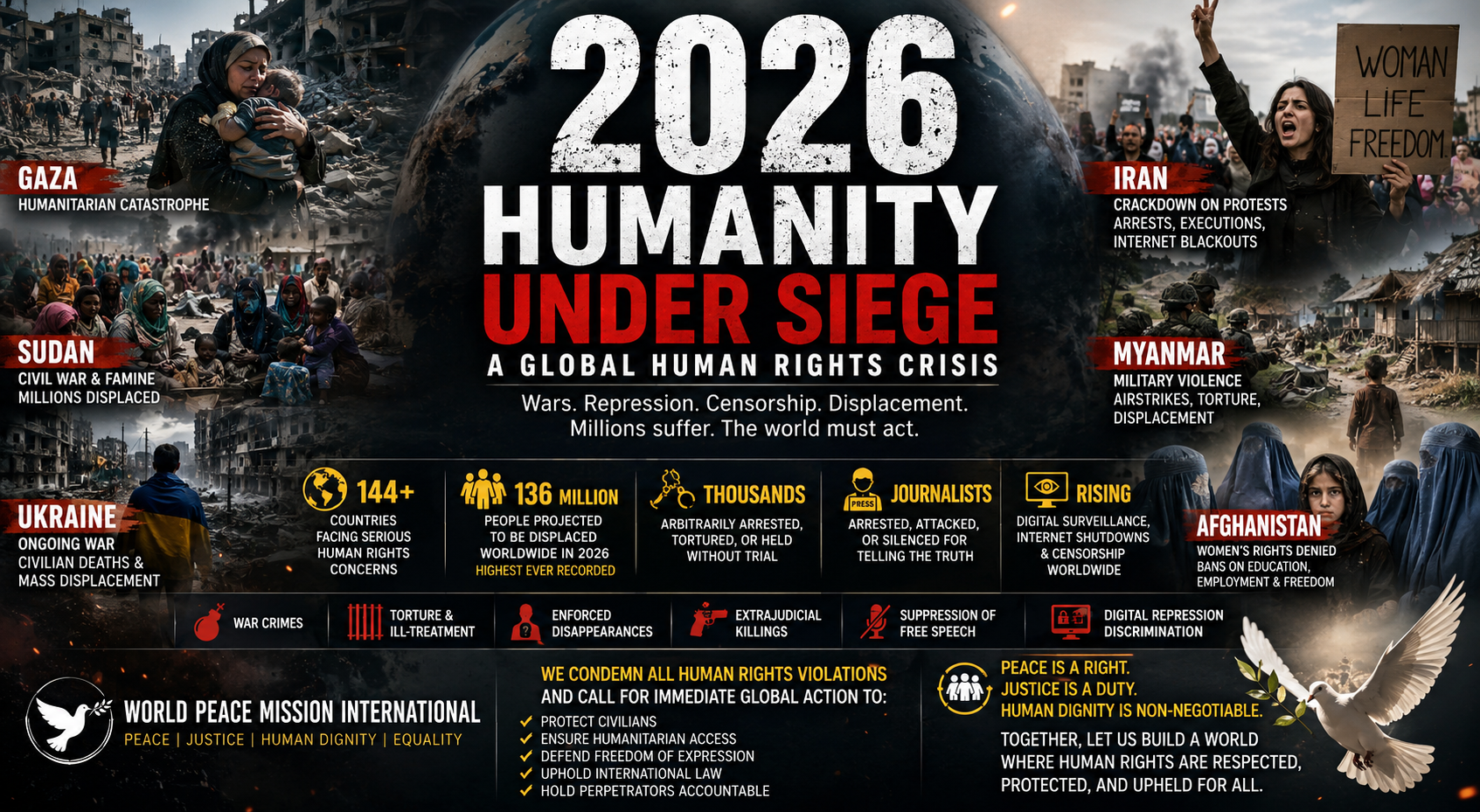
The year 2026 is rapidly becoming one of the darkest periods for global human rights in modern history. According to international assessments by UNHCR, and the United Nations Human Rights Office, more than 144 countries are currently facing serious human rights concerns, while global forced displacement is projected to surpass 136 million people by the end of the year, the highest figure ever recorded. Millions of civilians across conflict zones continue suffering from war crimes, torture, political imprisonment, enforced disappearances, internet shutdowns, and restrictions on freedom of speech and media. Human rights observers warn that global instability, authoritarian governance, and weakening international accountability are accelerating the crisis at an unprecedented pace.
From Gaza and Sudan to Ukraine, Myanmar, Iran, and Afghanistan, humanitarian catastrophes continue to intensify. In Sudan alone, millions remain displaced due to civil war and famine conditions, while Gaza faces one of the world’s worst humanitarian emergencies with widespread destruction of civilian infrastructure, hospitals, and residential areas. The Russia Ukraine war continues to cause civilian deaths, mass displacement, and infrastructure devastation, while Myanmar’s military conflict has forced large populations to flee their homes. Reports linked to Iran’s political unrest have documented thousands of arrests, internet blackouts, executions, and allegations of mass civilian deaths. Human rights organizations say that civilians, especially women, children, refugees, journalists, and minority communities, are paying the highest price in nearly every major global crisis zone.
One of the most alarming trends of 2026 is the rapid rise of digital repression and technological surveillance. Governments across multiple regions are increasingly using artificial intelligence monitoring systems, facial recognition technology, spyware, and online censorship to silence dissent and suppress independent journalism. International watchdogs have reported growing attacks on journalists, activists, and civil society groups, with media restrictions and protest crackdowns expanding in dozens of countries worldwide. Women’s rights violations have also intensified, particularly in Afghanistan and conflict affected regions, where bans on education, employment restrictions, forced displacement, and gender based violence continue to deepen humanitarian suffering.
World Peace Mission International has strongly condemned the escalating global human rights violations and called for immediate international action to protect civilians, restore humanitarian access, defend press freedom, and uphold international law without political bias or double standards. The organization emphasized that peace, justice, equality, and human dignity are universal rights that cannot be ignored in the face of war, oppression, and state violence. As the number of displaced people, civilian casualties, and humanitarian emergencies continues rising across the world, 2026 is no longer just a global warning, it has become a defining test of humanity’s conscience and commitment to protecting fundamental human rights.
By RIZWAN SHAH
© 2026 World Peace Mission International. All Rights Reserved. Designed by Ibrash Softwares

Leave a Reply