Latest News

Analytic Desk of WPM-International
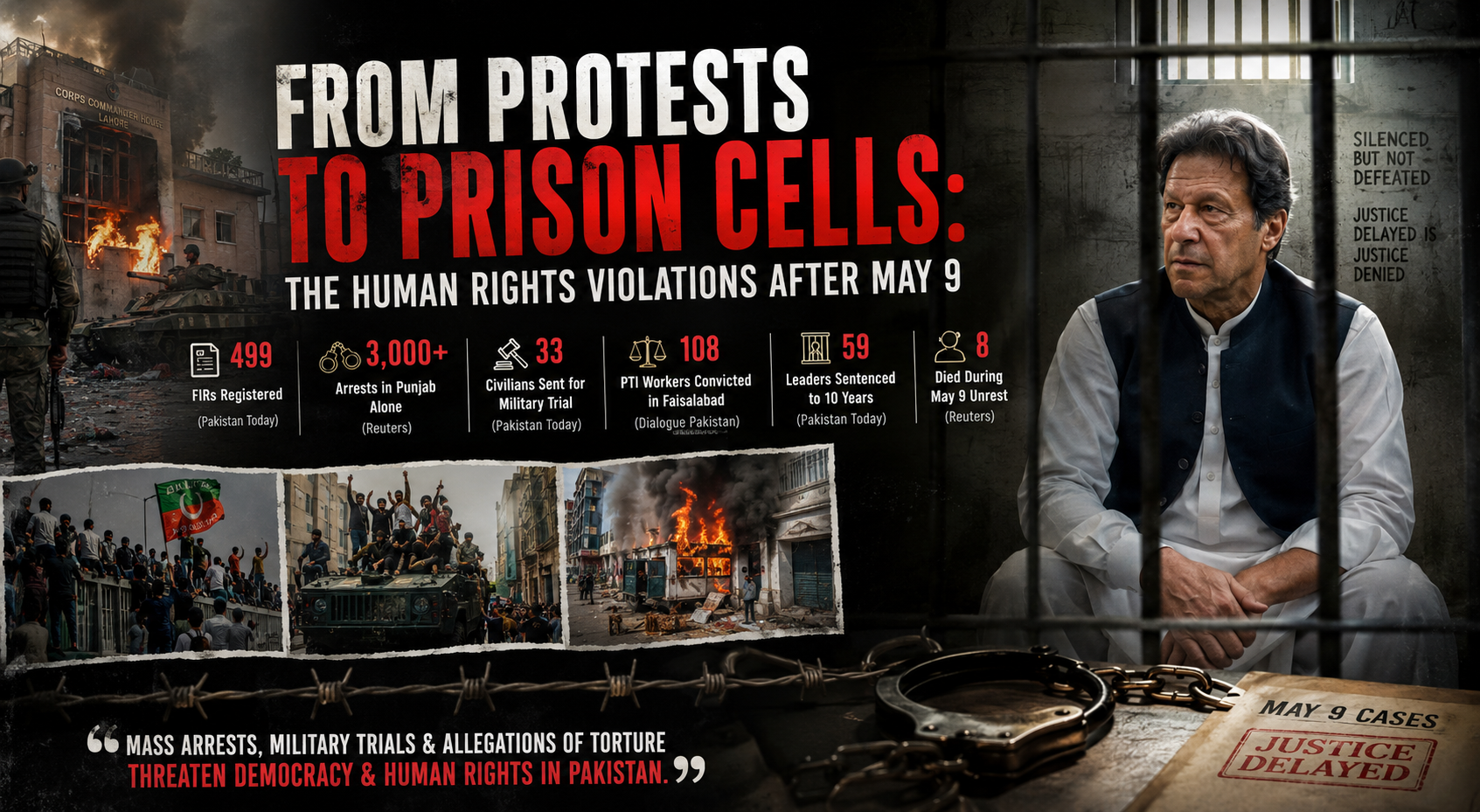
Pakistan continues to face growing criticism over the massive crackdown launched after the May 9, 2023 unrest, as thousands of supporters linked to Imran Khan and Pakistan Tehreek-e-Insaf remain entangled in legal battles, detentions, and military court proceedings. According to government figures, nearly 499 FIRs were registered nationwide after the protests and attacks on military installations (Pakistan Today). Punjab police and official sources confirmed more than 3,000 arrests in Punjab alone, while PTI leaders and rights activists claimed that detentions across Pakistan exceeded 10,000 workers and supporters during the nationwide crackdown (Reuters).
Human rights groups have expressed alarm over the use of military courts against civilians. Pakistani authorities initially confirmed that at least 33 civilians accused in May 9 incidents were transferred for military trials (Pakistan Today), a move strongly criticized by international legal observers and civil liberties organizations. Anti-Terrorism Courts later handed down harsh punishments in multiple cases, including convictions of 108 PTI workers and leaders in Faisalabad (Dialogue Pakistan), while another 59 supporters and leaders received 10-year prison sentences in separate rulings (Pakistan Today). Critics argue that prolonged detentions, repeated delays in bail hearings, and selective prosecutions have created serious questions about judicial fairness and political targeting.
The crackdown has also sparked concern over alleged custodial abuse and prisoner welfare. Reuters reported that at least eight people died during the May 9 unrest itself, while PTI repeatedly accused authorities of torture, mistreatment, and intimidation of detainees. However, Pakistan has yet to release any transparent nationwide audit regarding deaths in custody, alleged torture cases, or prisoners who reportedly died after release due to health complications linked to detention. Human rights observers argue that the absence of independent investigations has deepened public distrust and intensified fears about shrinking democratic space in the country.
At the center of the crisis remains former Prime Minister Imran Khan, who has faced an unprecedented wave of legal cases ranging from the May 9 riots to terrorism allegations, the Cipher case, Toshakhana proceedings, and the Al-Qadir Trust reference. Various media reports and PTI legal teams estimate that between 180 and 300 FIRs and legal cases have been filed against him. PTI alleges that repeated hearing delays, prolonged bail decisions, and selective legal treatment amount to denial of justice, while the government maintains that all prosecutions are being conducted under the law.
The ongoing situation has become one of the most controversial human rights and political crises in Pakistan’s recent history. Meanwhile international mediator Faisal Muhammed and several global observers have called for dialogue, judicial transparency, and protection of democratic freedoms in Pakistan. Rights advocates warn that mass arrests, military trials of civilians, prolonged imprisonments, and allegations of custodial abuse risk undermining constitutional freedoms, democratic norms, and public confidence in the justice system. Calls are growing for transparent investigations, fair trials, judicial independence, and protection of fundamental human rights for all political prisoners and detainees regardless of political affiliation. In a strongly worded statement, World Peace Mission International condemned the escalating pattern of political detentions and reported judicial irregularities, describing the situation as a “grave departure from constitutional justice” and urging an immediate halt to practices that, in its view, erode civil liberties, weaken democratic institutions, and deepen national polarization.
By: Daniel Carter
© 2026 World Peace Mission International. All Rights Reserved. Designed by Ibrash Softwares

Leave a Reply