Latest News

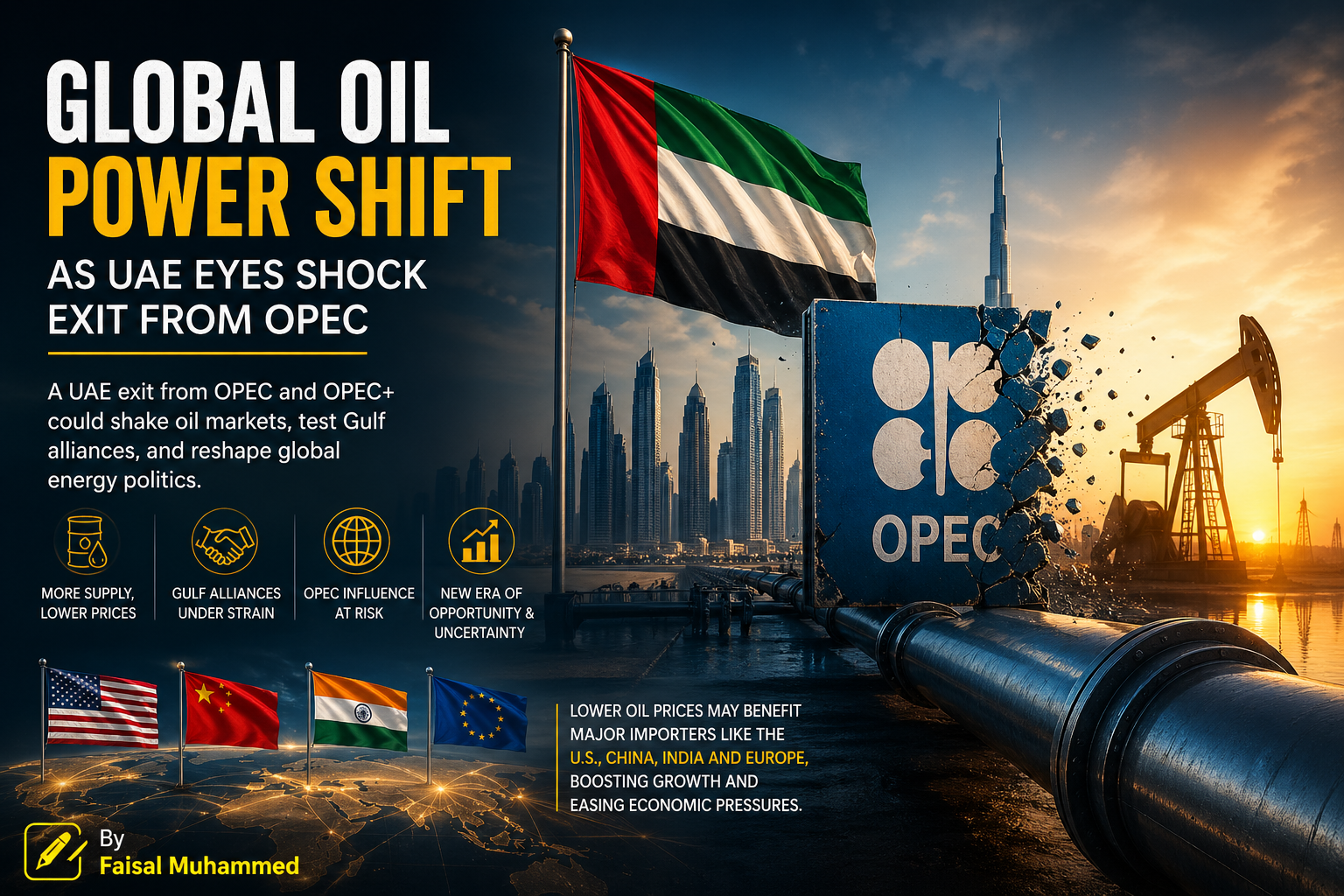
The UAE’s withdrawal from OPEC and OPEC+ would represent far more than a routine policy adjustment it could become a defining moment in global energy politics. For decades these alliances have served as pillars of market stability price management and coordinated production strategy. If Abu Dhabi chooses an independent course the global oil market could face fresh volatility as higher Emirati output may increase supply pressure and push prices downward. While cheaper crude may provide relief to consumers and importing economies it could also create uncertainty for producers and slow momentum in renewable energy investment.
The strategic consequences could be equally significant. A UAE departure may test regional dynamics particularly its long standing partnership with Saudi Arabia while raising broader questions about OPEC unity and future influence. It could also encourage other producers to reassess their own commitments, potentially reshaping the balance of power within OPEC+. For the UAE greater independence may bring production flexibility and stronger short term revenues, but it would also carry the risks that come with acting outside a collective framework. In the near term the likely beneficiaries would be major oil importing economies such as the United States China India and European nations, as lower energy prices could ease inflation reduce industrial costs and support economic growth.
By Faisal Muhammed
© 2026 World Peace Mission International. All Rights Reserved. Designed by Ibrash Softwares


Leave a Reply