Latest News

By Rizwan Shah
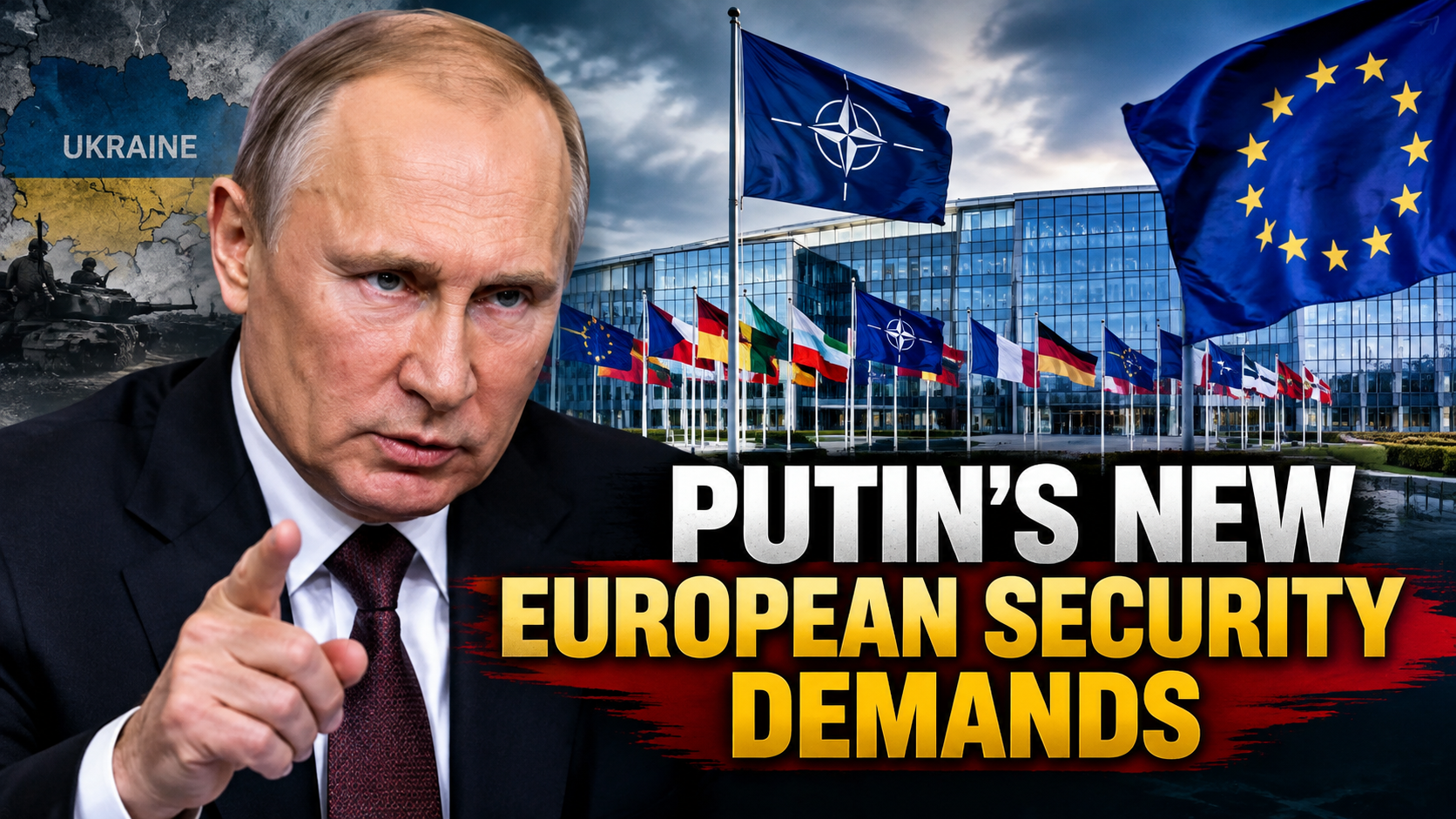
Russian President Vladimir Putin has renewed Moscow’s push for a sweeping overhaul of Europe’s security architecture, linking lasting peace in Ukraine to new security arrangements that would address Russia’s long-standing demands over NATO expansion.
Putin’s remarks come nearly five years after Russia launched its full-scale invasion of Ukraine, while Moscow continues to resist calls for an immediate comprehensive ceasefire. Following talks with US envoys Steve Witkoff and Jared Kushner in Moscow, the Kremlin reiterated its demand for a “new, long-term architecture of indivisible security and peace.”
At the centre of Russia’s demands is a controversial proposal first presented in December 2021, just two months before the invasion. Moscow had called for legally binding guarantees preventing NATO from expanding further east, particularly into Ukraine and Georgia, and demanded the withdrawal of NATO military infrastructure from countries that joined the alliance after the collapse of the Soviet Union.
Western governments rejected those proposals at the time, describing them as unacceptable. However, the Kremlin has now brought them back into discussions, with President Putin’s foreign policy adviser Yuri Ushakov indicating that Russia could introduce additional demands in response to what Moscow describes as Western efforts to inflict a strategic defeat on Russia.
The development has raised concerns among European leaders, who fear Moscow is attempting to use Ukraine peace negotiations to reshape the continent’s wider security arrangements. EU foreign policy chief Kaja Kallas described Russia’s proposal as a “trap,” arguing that securing a ceasefire must come before discussions about Europe’s future security framework.
Europe’s exclusion from the latest diplomatic discussions has also become a major concern. The recent talks in Abu Dhabi involved Ukraine, Russia and the United States, while European governments have struggled to secure a direct role in negotiations over the future of the continent’s security.
Although US envoy Steve Witkoff suggested Putin had agreed in principle to European representatives joining the next round of peace talks, Kremlin spokesman Dmitry Peskov later said no final decision had been made. Moscow indicated that European participation would depend on whether it considered their intentions supportive of the peace process.
The renewed diplomatic debate signals that negotiations over Ukraine could extend beyond ending the war, potentially opening a much wider confrontation over NATO, European security and the future balance of power between Russia and the West.
© 2026 World Peace Mission International. All Rights Reserved. Designed by Ibrash Softwares

Leave a Reply